
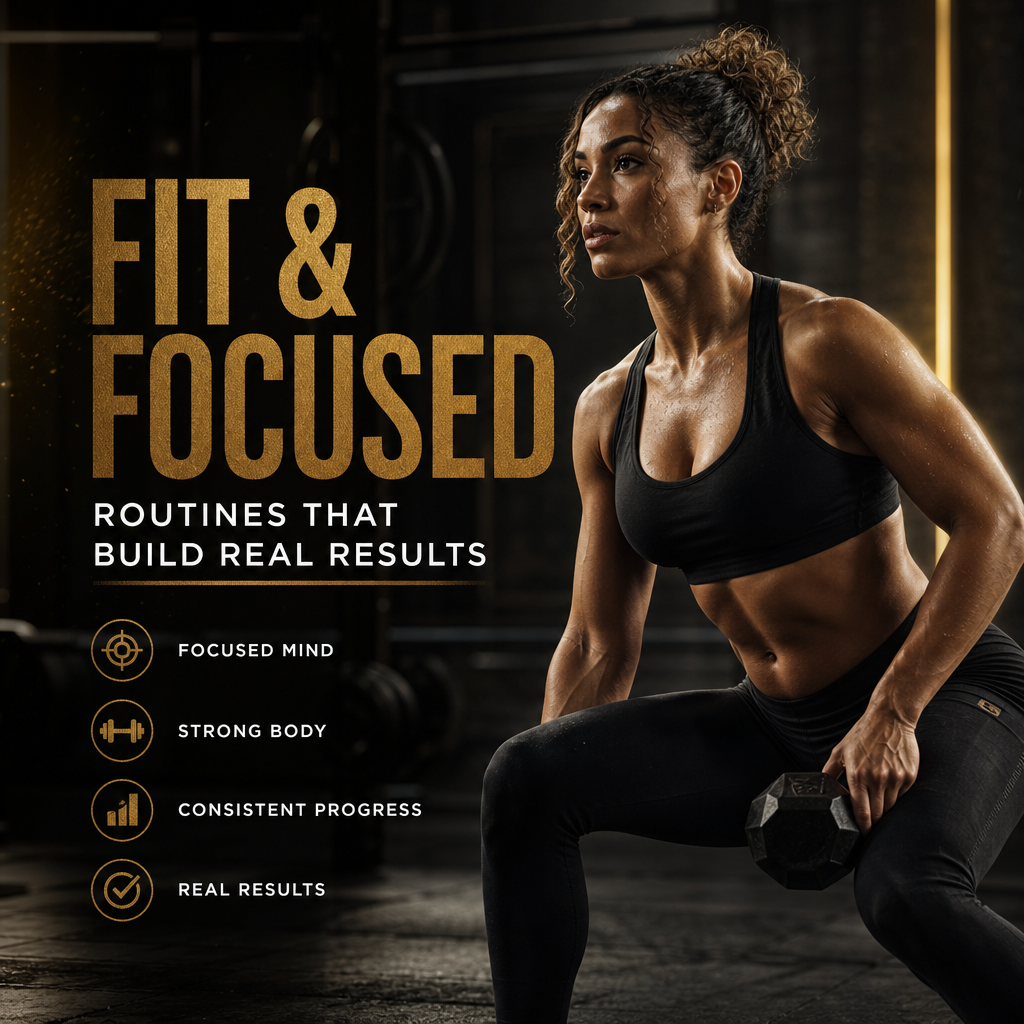
Fit & Focused: Routines That Build Real Results is about training with purpose instead of chasing random workouts. The best routines are not the most intense ones; they are the ones you can repeat, improve, and recover from week after week.
A strong routine gives your body enough stimulus to adapt while keeping your mind clear and your schedule manageable. That balance is what turns effort into visible progress.
Why routines matter
A good routine removes guesswork. When you know what to do on each training day, you spend less energy deciding and more energy doing.
Routines also make progress easier to measure. If you repeat key movements and track performance over time, you can clearly see whether you are getting stronger, building endurance, or improving consistency.
Most people do better with structure than with spontaneity. Even a simple plan can outperform a complicated one if it fits your life and keeps you showing up.
What real results look like
Real results are not just about the scale or the mirror. They also include better energy, stronger joints, improved posture, more confidence, and a greater sense of control over your health.
People often expect dramatic changes in a few days, but sustainable fitness works differently. The clearest results usually come from small improvements repeated over months.
That means:
- Lifting a little more than last month.
- Walking more often.
- Recovering better.
- Staying consistent even when motivation drops.
Those small wins compound into meaningful change.
The foundation of an effective routine
Every strong routine is built on a few basics: consistency, progression, recovery, and balance. If one of those is missing, results usually slow down.
Consistency means you train often enough to create adaptation. Progression means you gradually make the work harder. Recovery means your body has time to rebuild. Balance means your routine supports your whole life, not just one goal.
When these elements work together, the routine becomes sustainable instead of exhausting.
Build a routine you can repeat
The best routine is the one you can keep doing. That sounds simple, but it is one of the most important parts of getting results.
Start with the number of days you can realistically commit to each week. For many people, that is two to four training days, plus light movement on rest days.
A repeatable routine might include:
- Full-body workouts three times per week.
- Short walks on off days.
- One or two mobility or stretching sessions.
- Enough rest to keep performance high.
This kind of setup works because it is practical. It does not require perfect conditions, only regular effort.
Strength work matters
Strength training is one of the most efficient ways to build real results. It helps preserve muscle, improve metabolism, and make everyday movement easier.
Compound movements usually give the most return for your time. Exercises like squats, hinges, presses, rows, lunges, and carries train multiple muscle groups at once.
A basic strength routine might include:
- Squats or leg presses.
- Hip hinges or deadlift variations.
- Push exercises like bench press or push-ups.
- Pull exercises like rows or pulldowns.
- Core work that supports stability.
You do not need to do everything at once. A few solid exercises done consistently will often beat a long, unfocused workout.
Cardio still has a place
Cardio is not just for calorie burn. It supports heart health, endurance, recovery, and overall work capacity.
The best cardio routine is one you can maintain without feeling drained. For some people, that means brisk walking. For others, it means cycling, rowing, jogging, or interval training.
A balanced routine often includes:
- Steady-state cardio for endurance.
- Shorter, more intense sessions when appropriate.
- Daily movement like steps and walking.
Cardio works best when it complements strength training instead of replacing it.
Recovery drives progress
Many people focus on training but ignore recovery. That is a mistake because adaptation happens between sessions, not during them.
Recovery includes sleep, nutrition, hydration, stress management, and rest days. If those are poor, your workouts will feel harder and your progress may stall.
Useful recovery habits include:
- Sleeping enough each night.
- Eating enough protein.
- Drinking enough water.
- Taking rest days seriously.
- Reducing unnecessary stress where possible.
You do not need perfect recovery, but you do need enough of it to keep training well.
Focus improves consistency
Focus is the mental side of fitness. It helps you stay on track when you are tired, busy, or unmotivated.
A focused routine works because it removes distractions. You know your training days, your main exercises, and your next step. That clarity makes it easier to stay disciplined.
Good focus also means avoiding the habit of constantly changing programs. If you switch too often, you never stay with one plan long enough to see what it can do.
A simple weekly structure
You do not need a complicated schedule. In fact, simple often works better.
Here is one example of a balanced weekly routine:
- Monday: Full-body strength training.
- Tuesday: Walking or light cardio.
- Wednesday: Full-body strength training.
- Thursday: Mobility and recovery.
- Friday: Full-body strength training.
- Saturday: Cardio or active recreation.
- Sunday: Rest.
This plan gives you enough training volume while leaving room for recovery. It also creates a rhythm that is easy to follow.
Nutrition supports the work
Training is only one part of the equation. Nutrition helps determine whether your body has the fuel to perform and recover.
You do not need a perfect diet, but you do need a solid one. That usually means enough protein, enough total calories for your goal, and a reasonable balance of carbohydrates and fats.
Simple nutrition habits can make a big difference:
- Eat protein at most meals.
- Include fruits and vegetables.
- Stay hydrated throughout the day.
- Avoid long stretches of under-eating if you are trying to build muscle.
The more consistent your nutrition is, the easier it becomes to see progress from your training.
Track what matters
Tracking helps you see whether your routine is actually working. Without it, it is easy to guess wrong about your progress.
You can track:
- Weight lifted.
- Reps completed.
- Training days per week.
- Steps or cardio sessions.
- Sleep and recovery quality.
This does not need to be complicated. A basic notebook or app is enough. The goal is to make your progress visible so you can adjust intelligently.
Avoid common mistakes
One of the biggest mistakes is doing too much too soon. New routines often fail because people start with unrealistic volume or intensity.
Another mistake is focusing only on motivation. Motivation helps at the beginning, but systems keep you going when motivation fades.
Other common mistakes include:
- Not resting enough.
- Using poor form.
- Changing plans too often.
- Ignoring nutrition.
- Comparing yourself to other people.
If you avoid these traps, your routine becomes much easier to sustain.
How to stay motivated
Motivation is useful, but it should not be your only fuel. A better strategy is to build habits that make action automatic.
That means scheduling workouts, preparing your clothes or gear in advance, and making your routine simple enough that starting feels easy. When the process is easy to begin, you are more likely to follow through.
It also helps to set process goals instead of only outcome goals. For example, focus on completing three workouts per week rather than only trying to lose a certain amount of weight.
Results take time
Real fitness results are slow enough to require patience but fast enough to notice if you stay consistent. That is why good routines matter so much.
You may not see dramatic changes in a week, but you can often feel better within a few weeks. Over time, those small improvements become visible strength, better energy, and better body composition.
The best way to get there is not by chasing perfection. It is by following a routine that works, adjusting it when needed, and staying with it long enough for the results to show.
Final thoughts
Fit & Focused: Routines That Build Real Results is a reminder that progress comes from structure, not chaos. The most effective routines are simple, repeatable, and built around the basics of training, recovery, and consistency.
If you want real change, choose a plan you can follow, train with intention, and give your body enough time to adapt. That is how fitness becomes something you build into your life, not something you keep restarting.