
Key Takeaways
- The EU has issued roughly 230 MiCA licenses, with Germany leading on 56, the Netherlands on 26, and France on 21.
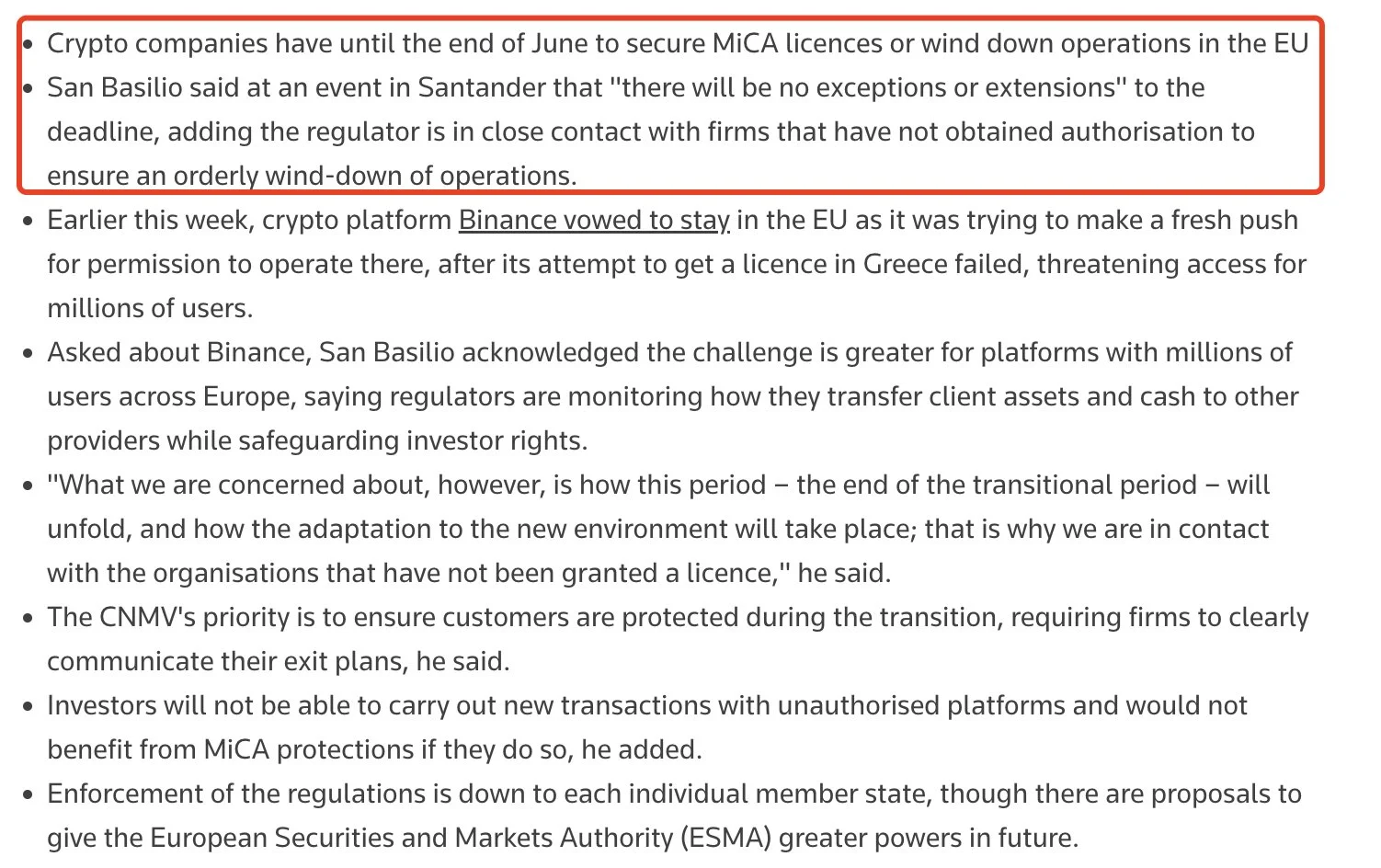
- Spain’s CNMV says there will be no extension to the July 1 deadline for crypto firms.
- More than 80% of EU crypto firms remain unlicensed days before the transitional period ends.
A Bloc Splits Along National Lines
Around 230 firms have secured authorization under the Markets in Crypto-Assets (MiCA) framework so far, according to industry tallies, as the regime reshapes how crypto businesses operate across Europe.
Germany leads with 56 licenses, followed by the Netherlands with 26 and France with 21, a distribution that has raised concerns about market diversity as activity consolidates in a handful of jurisdictions.
The uneven spread has once again shown how firms have tended to obtain a license in the most efficient jurisdictions and then passport their services across the bloc, concentrating approvals in a few member states while others have issued few or none.
That same concentration, however, has the industry worrying, given that higher compliance costs and heavy documentation requirements have pushed smaller players to exit or merge, and critics warn the shake-out could hand outsized influence to a small group of well-resourced platforms.
Spain Slams the Door on an Extension
The clustering of licenses comes as the bloc nears the end of MiCA’s transitional period on July 1, 2026. Spain’s securities regulator has stated there will be no extensions to the deadline, meaning non-compliant crypto exchanges could face restrictions across the EU once the date passes.
That position aligns with the European Securities and Markets Authority (ESMA), which has emphasized that a pending application offers no protection past the cutoff. Under MiCA’s transitional rules, the right to keep serving European users ends on July 1 or when an application is granted or refused, whichever comes first.
The message to firms still waiting on approval is blunt but simple, i.e. any exchange with an application in progress but no license by July 1 must stop serving European customers until it receives authorization, a scenario Bitcoin.com News has outlined could trigger service suspensions for millions of users.
The Unlicensed Majority
Despite the wave of approvals, the bulk of the market remains outside the system as more than 80% of EU crypto firms are still unlicensed days before the deadline, with only a few hundred of more than 1,200 virtual asset service providers having converted to full authorization.
Some major operators are scrambling for a route through though with Binance withdrawing its MiCA application in Greece in late June. It is now racing to secure a license elsewhere in the bloc, a sign of how disruptive the deadline has become even for the largest exchanges.
What happens next stands to define Europe’s crypto map, given compliant platforms will absorb the bulk of their rivals’ market share (while users of unlicensed services may have to move funds or migrate to authorized providers).