


Today in crypto, Sonic Labs’ leadership upheaval, which saw three directors step down and the appointment of a new CEO and chief operating officer, saw the S token slide 5%. In Europe, there are new questions about whether the European Central Bank has played a role in Binance’s MiCA license woes. In the US, Franklin Templeton filed for two US exchange-traded funds designed to convert stock dividends into Bitcoin exposure.
S token drops 5% as 3 former execs resign from Sonic Labs board
The S token, the native utility asset behind the Sonic blockchain, dipped on Friday after Sonic Labs announced the resignation of three former executives from its board.
The S token fell to 0.031, down 5% over 24 hours. The resignations include Michael Kong, a former CEO of the Fantom Foundation and director at Sonic Labs; David Richardson, who served as executive chairman of Sonic Labs; and Andre Cronje, who previously served as its chief technology officer.

Statement from Andre Cronje about his resignation from the board. Source: Andre Cronje
“These are the people who built what Sonic is today. They remain invested in Sonic’s success and are handing off their responsibilities the right way, in full. From here, they will no longer make business decisions for the organization,” Sonic Labs said as it announced Matt Visser as its new CEO and Kosta Kourkoumelis as chief operating officer.
Sonic Labs is overhauling its leadership and governance structure as it attempts to address growing community dissatisfaction and a prolonged decline in its S token, which has fallen 97% since launching in January 2025 as part of a network upgrade.
Franklin Templeton pursues Bitcoin-linked ETFs
Asset manager Franklin Templeton has filed for two exchange-traded funds (ETFs) that would convert dividend income from US stocks into exposure to Bitcoin, expanding the range of institutional investment products tied to the digital asset.
According to filings with the US Securities and Exchange Commission (SEC), the Franklin US Equity Bitcoin DRIP Index ETF and Franklin US Innovation Bitcoin DRIP Index ETF would track indexes that automatically reinvest dividends, allocating 95% of assets to US equities and 5% to Bitcoin.
The funds could gain Bitcoin exposure through several instruments, including spot Bitcoin ETFs, futures contracts and Bitcoin-backed depository receipts.
The filing comes as demand for Bitcoin investment products has cooled markedly in recent months, highlighting a slowdown in institutional appetite. According to SoSoValue, US spot Bitcoin ETFs recorded six consecutive weeks of net outflows through June 18.
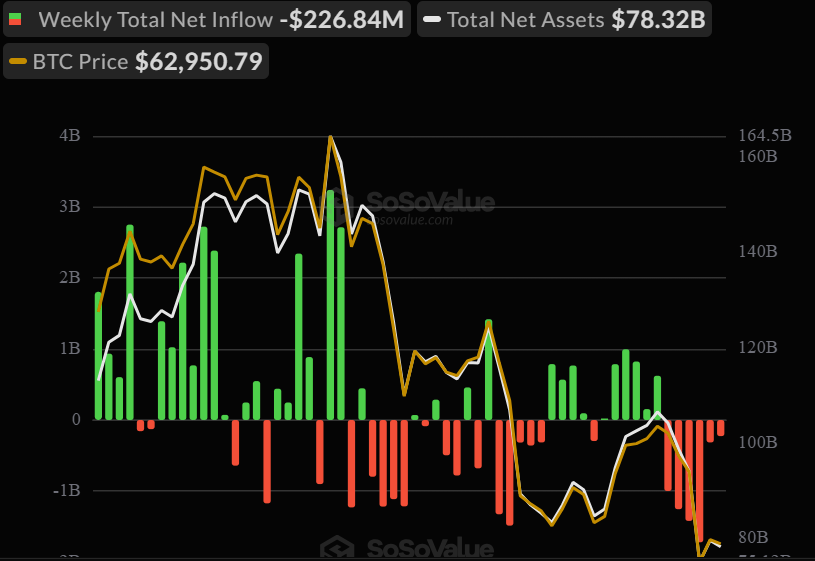
US spot Bitcoin ETFs have recorded heavy outflows since mid-May. Source: SoSoValue
Binance’s MiCA fight raises questions over ECB influence
Binance’s faltering EU Markets in Crypto-Assets Regulation (MiCA) license application in Greece has raised questions about whether the bloc’s central bank may have played an informal role in the process, despite not having formal authority over licensing decisions.
Even though MiCA assigns approval of crypto-asset service provider (CASP) licenses to national competent authorities, lawyers told Cointelegraph that its wording does not prevent other EU institutions, including the European Central Bank (ECB), from communicating with those regulators during the review process.

Source: EUR-Lex
“Nothing in the MiCA framework would prevent a third party like the ECB from offering its opinion to that national authority on Binance’s application,” David Lesperance, founder at Lesperance & Associates, told Cointelegraph.
The Big Whale reported on Wednesday, citing unnamed sources, that ECB President Christine Lagarde had signaled to Greek Prime Minister Kyriakos Mitsotakis that Binance was not welcome in Europe. The report followed a Reuters story on Tuesday that Greece’s market regulator was set to reject Binance’s MiCA application.
The reports surfaced less than two weeks before the end of MiCA’s transitional period on July 1, a deadline that will determine which crypto firms can continue operating across the EU under its licensing regime.





Leave a Reply