
It’s been a memorable six weeks for Wall Street and investors. The Dow Jones Industrial Average (^DJI 0.09%), S&P 500 (^GSPC 1.44%), and Nasdaq Composite (^IXIC 2.21%) flew to new highs; the largest initial public offering in Wall Street’s history occurred; and we witnessed an ultra-rare change at the Federal Reserve.
On May 15, Jerome Powell served his final day as Fed chair. One week later, on May 22, President Trump’s handpicked successor to Powell, Kevin Warsh, was officially sworn in.
Warsh was previously on the Board of Governors and was a voting member of the Federal Open Market Committee (FOMC) — the 12-person body that sets the nation’s monetary policy — from Feb. 24, 2006, to March 31, 2011. This means he played a role in steering the U.S. economy through the financial crisis.
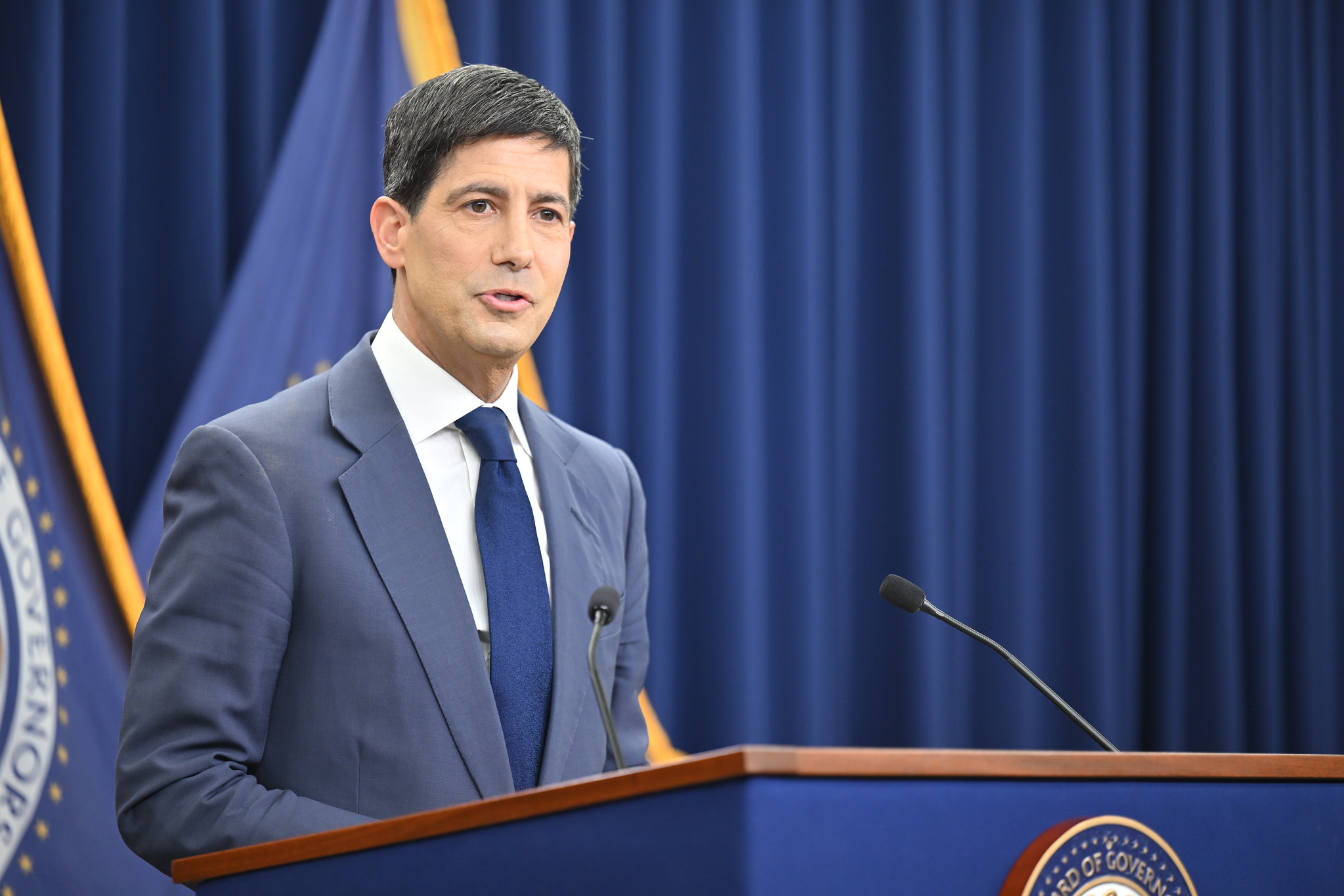
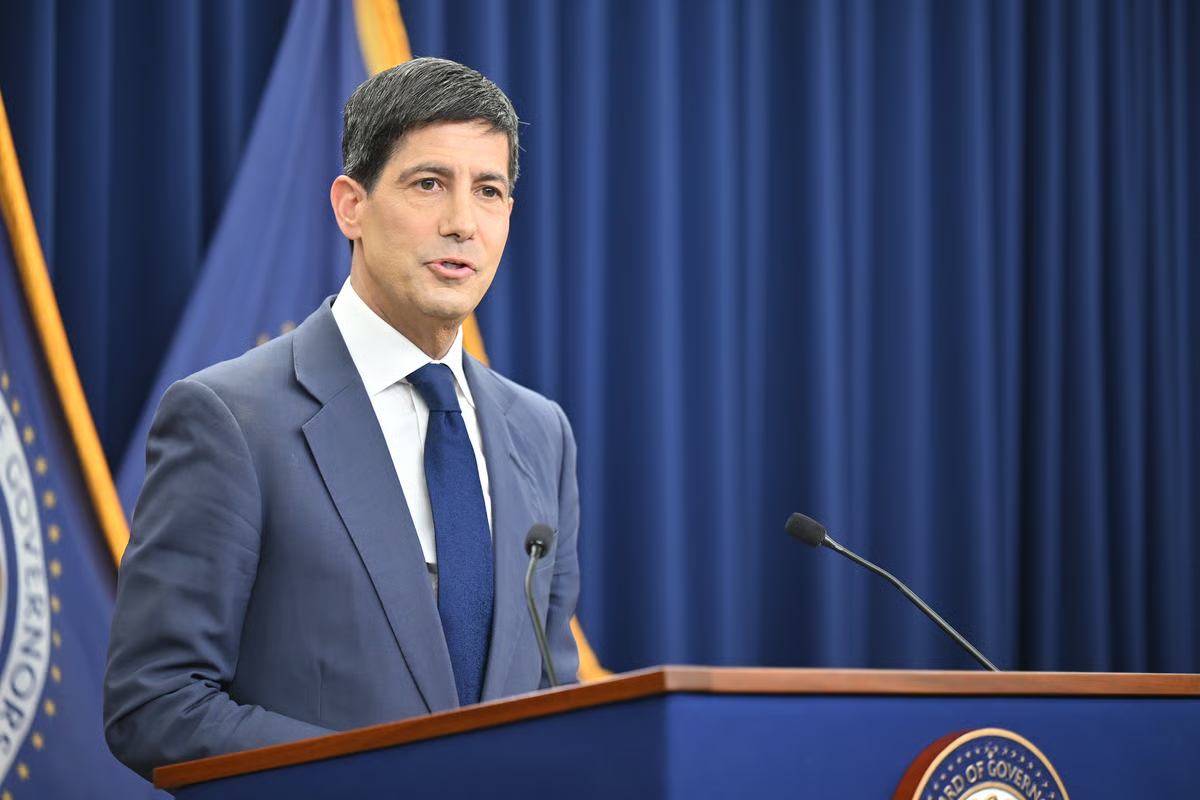
Kevin Warsh presided over his first FOMC meeting as Fed chair on June 17. Image source: Official Federal Reserve Photo.
But even with more than five years of prior FOMC experience under his belt, Warsh is taking the reins at a particularly challenging time. The new Fed chair’s 10-word statement on inflation implies that he recognizes the challenge at hand, and that Wall Street may be forced to take its medicine in the not-too-distant future.
Inflation is at a three-year high, which may necessitate the FOMC to act
Last week, Kevin Warsh oversaw his first FOMC meeting as Fed chair, with policymakers leaving the federal funds target rate unchanged at 3.5% to 3.75%, as expected. But this headline figure doesn’t come close to telling the full story of Warsh’s inaugural meeting as head of the central bank.
The big story leading up to the June FOMC meeting was U.S. trailing 12-month (TTM) inflation reaching a three-year high. While President Trump’s tariffs have provided a modest boost to prices in the goods sector, the bulk of the recent surge of inflation can be traced to the Iran war.
Not long after Trump ordered the U.S. military to attack Iran on Feb. 28, the latter closed the Strait of Hormuz to most commercial vessels. This narrow shipping channel sees approximately 20% of the world’s petroleum liquids pass through it daily. In other words, the Iran war created the largest crude oil supply disruption in modern history.
The almost immediate spike in fuel prices sent inflation soaring. Between February and May, TTM inflation jumped from a modest 2.4% to 4.2%.
Kevin Warsh just ended his first ever FOMC meeting as Fed chair.
His message to markets: “I can’t give you any guidance on what we’re going to do next.”
Here is what he said:
1. Inflation is still way above the Fed’s 2% target and prices are too high for most people
2. “We… pic.twitter.com/rAjaqRu7HV
— Bull Theory (@BullTheoryio) June 17, 2026
Perhaps the biggest question leading up to Warsh’s inaugural FOMC meeting is how he’d address rapidly rising inflation. While the new Fed chair was reluctant to offer forward-looking guidance, he did provide a candid assessment on inflation:
We recognize that inflation has been running well ahead of the Fed’s long-stated inflation goal of 2 percent that’s been going on for more than five years. Persistently high prices are a burden for the American people.
But the recent past need not be prologue. I am pleased to report that members of the FOMC are unambiguous and unanimous: This Committee will deliver price stability.
Specifically, Warsh’s 10-word statement that “Persistently high prices are a burden for the American people” strongly implies that the FOMC will act in the near future to stabilize prices, whether Wall Street and investors want it to or not.

Image source: Getty Images.
A pricey stock market may be forced to take its medicine
Although the FOMC statement didn’t officially signal any likelihood of rate hikes, several clues suggest higher interest rates are coming before the end of the year.
For starters, the latest FOMC statement was devoid of an easing bias for the first time in well over a year. While policymakers didn’t officially shift their bias, what wasn’t said in this case is just as important as what was said. The removal of the easing bias statement comes after a majority of FOMC members opposed its inclusion, according to the April Fed meeting minutes.
Additionally, Warsh’s first FOMC meeting as Fed chair coincided with the quarterly release of the Summary of Economic Projections (commonly known as the “dot plot”). Out of the 18 FOMC members (not all of whom vote) who anonymously offered federal funds target rate projections, nine expect higher interest rates before the end of 2026. This includes five members who expect two rate hikes and one who believes there’ll be three.
Very hawkish dot plot.
Nine out of 18 officials have at least one hike this year (and six of those 9 have *multiple hikes*).
Only one person has a cut this year, and one participant (presumably Warsh) didn’t submit an SEP
The statement gets a complete writethru from top to… pic.twitter.com/KRwatpTFOP
— Nick Timiraos (@NickTimiraos) June 17, 2026
Warsh’s FOMC voting record also leans decisively hawkish. Throughout the financial crisis, Warsh cautioned against lowering interest rates, fearing low rates would spark inflation. Though he’s just one of 12 votes, he’s previously demonstrated that he favors higher interest rates as a tool to stabilize prices.
The growing possibility of one or more FOMC rate hikes is a tough pill for Wall Street to swallow — especially considering that investors entered the year expecting a handful of rate cuts.
Debt is one of the tools being used to facilitate the artificial intelligence (AI) data center build-out. If borrowing costs rise, businesses may be forced to slow their aggressive spending on AI infrastructure. This can lower growth projections for the second-priciest stock market in history.
Furthermore, higher interest rates tend to make investors pickier about equity valuations. Whereas the S&P 500’s Shiller Price-to-Earnings Ratio has averaged roughly 17.4 over the last 155 years, it came within a stone’s throw of touching 43 earlier this month. The stock market has absolutely no margin for error, and rate hikes might be enough to send Wall Street over the edge.
If Fed Chair Kevin Warsh makes Wall Street take its medicine to suppress inflation, it may very well mark the end of a historic bull market.