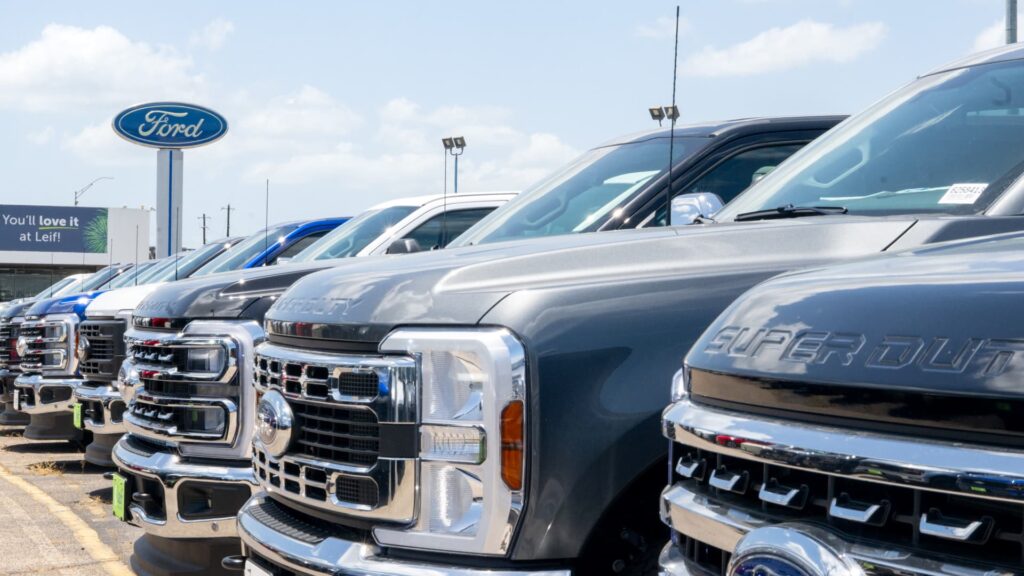
Ford Motor vehicles are displayed for sale at the Leif Johnson Ford dealership on June 30, 2026 in Austin, Texas.
Brandon Bell | Getty Images
DETROIT — Despite reporting a 10.2% decline in its July U.S. vehicle sales Tuesday, Ford Motor is touting the results as a “good sales month.”
That’s according to Rob Kaffl, Ford’s director of U.S. sales, who said the steep decline from the previous year was “by design,” as the Detroit automaker phases out two vehicles and lowered its daily rental fleet business.
“July was a good sales month for a number of reasons. Our July results reflect a strategy that is working exactly as planned: we’ve intentionally been sunsetting select models and pulled back on low-margin rental fleet volume to make room for an onslaught of new-product introductions by the end of the decade,” Kaffl said in an emailed statement.
Many times, automakers do not cancel products — like Ford has done with its Ford Escape and Lincoln Corsair — until closer to production of newer models. Or they build up inventories to assist sales during the changeover in production for new vehicles.
Kaffl said the company prioritized retail sales of its F-Series pickup trucks as the automaker continues to recover production after two aluminum fires last year at a major aluminum supplier. The company said rental sales, which are typically at lower profits, were reduced by 96% compared to a year earlier.
Without such actions, Ford contends its sales would be down less than 1%, slightly better than an estimated 2% fall for the overall industry compared to July 2025.
Planned or not, the decline last month adds to a lackluster sales year for the automaker following the problematic F-Series production as well as a pullback in all-electric vehicle sales. Ford’s sales year to date through July are down 9.7%.
Ford’s U.S. sales through June were already off 9.6% from a year earlier. That compares to an estimated 2.4% sales decline for the overall industry through the first half of the year, which doesn’t include July, according to the most recent data from Cox Automotive’s Kelley Blue Book.
Higher prices and consumer economic concerns are weighing on the overall auto industry, which Cox and other forecasters expect to be off about 3% compared to last year to 15.8 million vehicles sold.