
Bitcoin infrastructure company Breez has added a feature to its developer toolkit that lets users send USDC (USDC) and USDt (USDT) across more than 30 blockchain networks directly from a Bitcoin balance, without first converting or holding stablecoins.
According to an announcement shared with Cointelegraph, the feature uses the Lightning Network alongside automated conversion to route payments from Bitcoin (BTC) to USDC or USDT before delivering funds to the recipient’s preferred blockchain.
When a user enters a recipient’s wallet address, the Breez SDK identifies the destination blockchain, calculates a conversion route and displays the amount, network and fees before the payment is confirmed. The transaction is then routed through liquidity providers, including Flashnet and Boltz, which convert the sender’s Bitcoin into stablecoins and deliver it on the recipient’s chosen blockchain.
Roy Sheinfeld, CEO of Breez, told Cointelegraph the feature does not require USDT or USDC to be issued on the Lightning Network. Instead, it relies on “interoperability” to let users spend from a Bitcoin balance while recipients receive stablecoins on supported blockchain networks.
Breez said users continue holding Bitcoin until they initiate a payment, while recipients receive stablecoins on their preferred blockchain without requiring the sender to manage separate stablecoin balances. The feature is non-custodial and initially supports only outbound stablecoin payments, with support for receiving stablecoins from external blockchain networks planned for a future release.
The feature is designed to allow developers to add stablecoin payments without integrating multiple blockchain networks or requiring users to manage separate Bitcoin and stablecoin balances.
Related: Credit unions managing $25B in assets join stablecoin infrastructure program
Bitcoin payment infrastructure expands
The launch comes as companies expand Bitcoin and the Lightning Network, a layer-2 payment network designed to make Bitcoin transactions faster and less expensive, into new financial and commercial applications.
In February, Secure Digital Markets, an institutional trading and lending desk, completed a $1 million Bitcoin payment to Kraken over the Lightning Network in less than half a second, demonstrating the protocol’s potential for high-value institutional transfers. The transaction illustrated how Lightning is increasingly being tested for use cases beyond small retail payments.
That same month, Bitcoin infrastructure company Voltage introduced a US dollar-settled revolving credit line that embeds business credit into Lightning payment flows, allowing companies to settle repayments in either US dollars or Bitcoin. The product is intended to enable businesses to access working capital using Lightning for payments, without holding crypto on their balance sheets.
Event platform Satlantis also launched a Bitcoin-native ticketing platform with embedded Lightning wallets, allowing organizers to sell tickets and accept BTC alongside traditional payment methods.
In March, Tether-backed Bitcoin infrastructure startup Ark Labs in a $5.2 million funding round to develop technology supporting stablecoin issuance, transfers and settlement on Bitcoin.
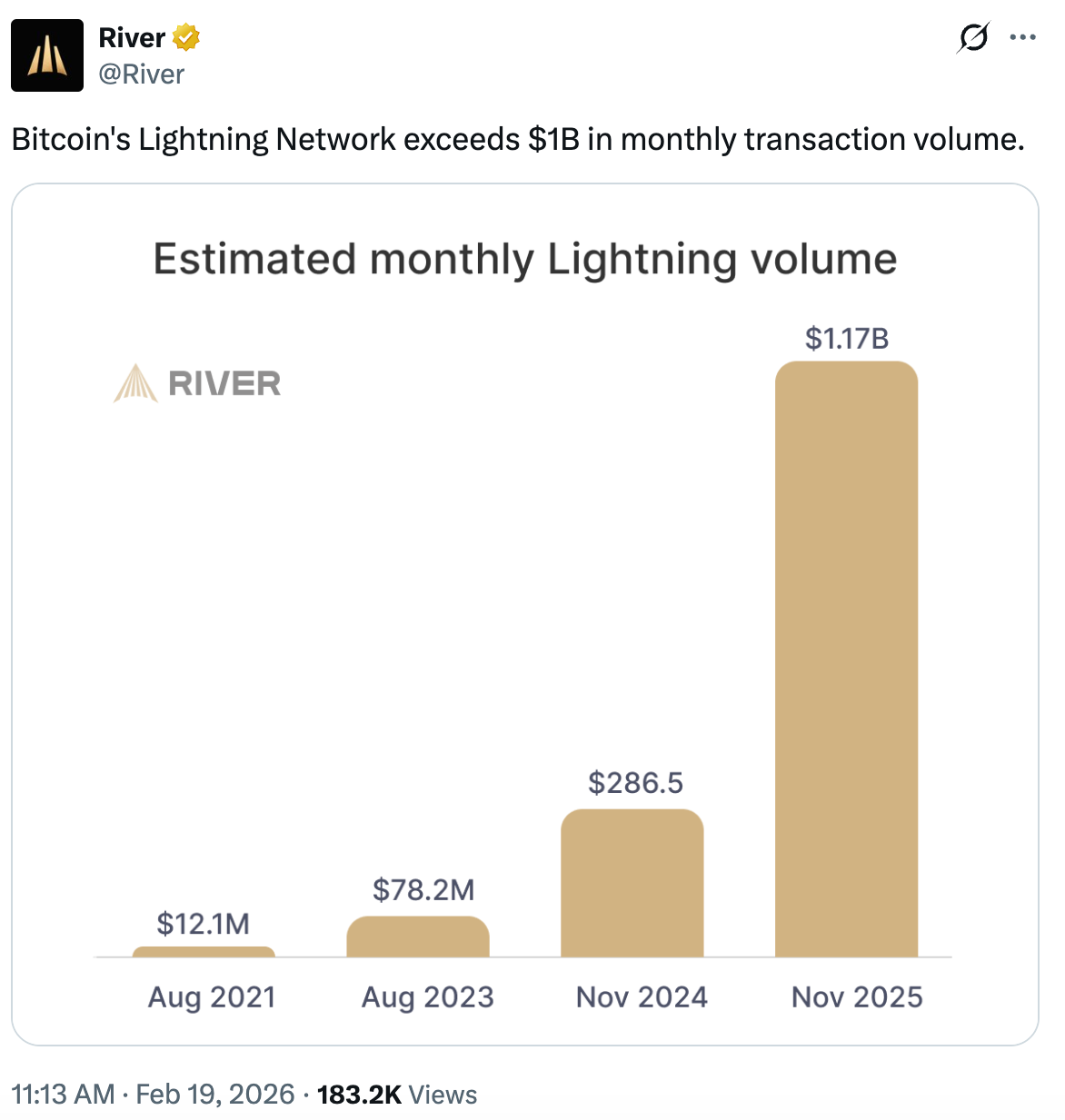
Lightning adoption has continued to grow. A February report from River estimated the network surpassed $1 billion in monthly transaction volume in late 2025, up from around $12 million in 2021.
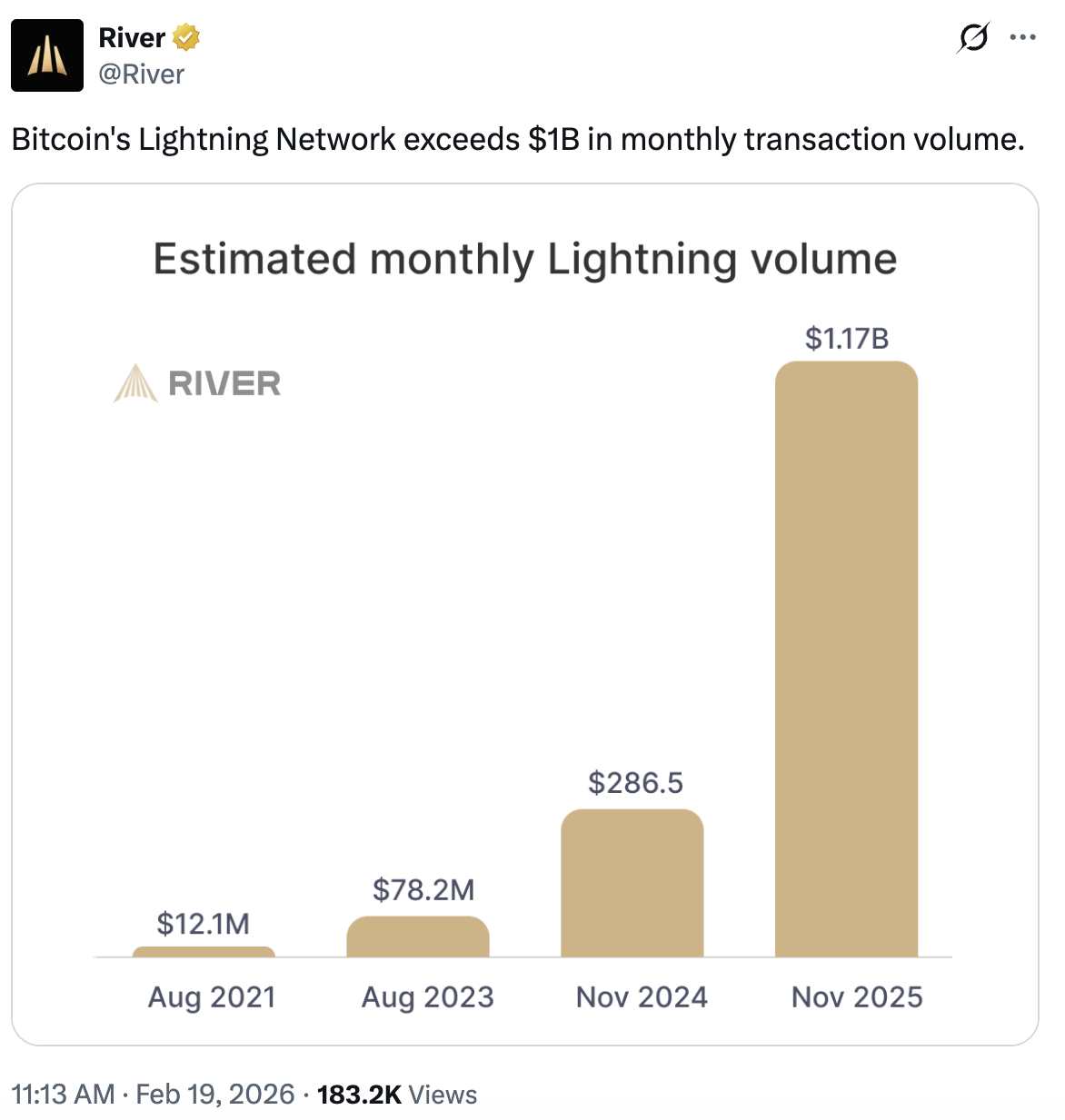
Lightning Network transaction volumes continue to grow. Source: River
Magazine: Bitcoin decouples from tech stocks, Ether eyes ‘selling wave’: Market Moves