


Earlier this month, the iconic Dow Jones Industrial Average (^DJI +0.14%), broad-based S&P 500 (^GSPC +1.08%), and growth-stock-propelled Nasdaq Composite (^IXIC +1.91%) rocketed to record highs. But the stock market isn’t the only thing raising eyebrows and turning heads at the moment.
The U.S. inflation rate is also soaring. The latest report from the U.S. Bureau of Labor Statistics shows that trailing 12-month (TTM) inflation reached 4.2% in May, marking the fastest pace of price increases since April 2023.
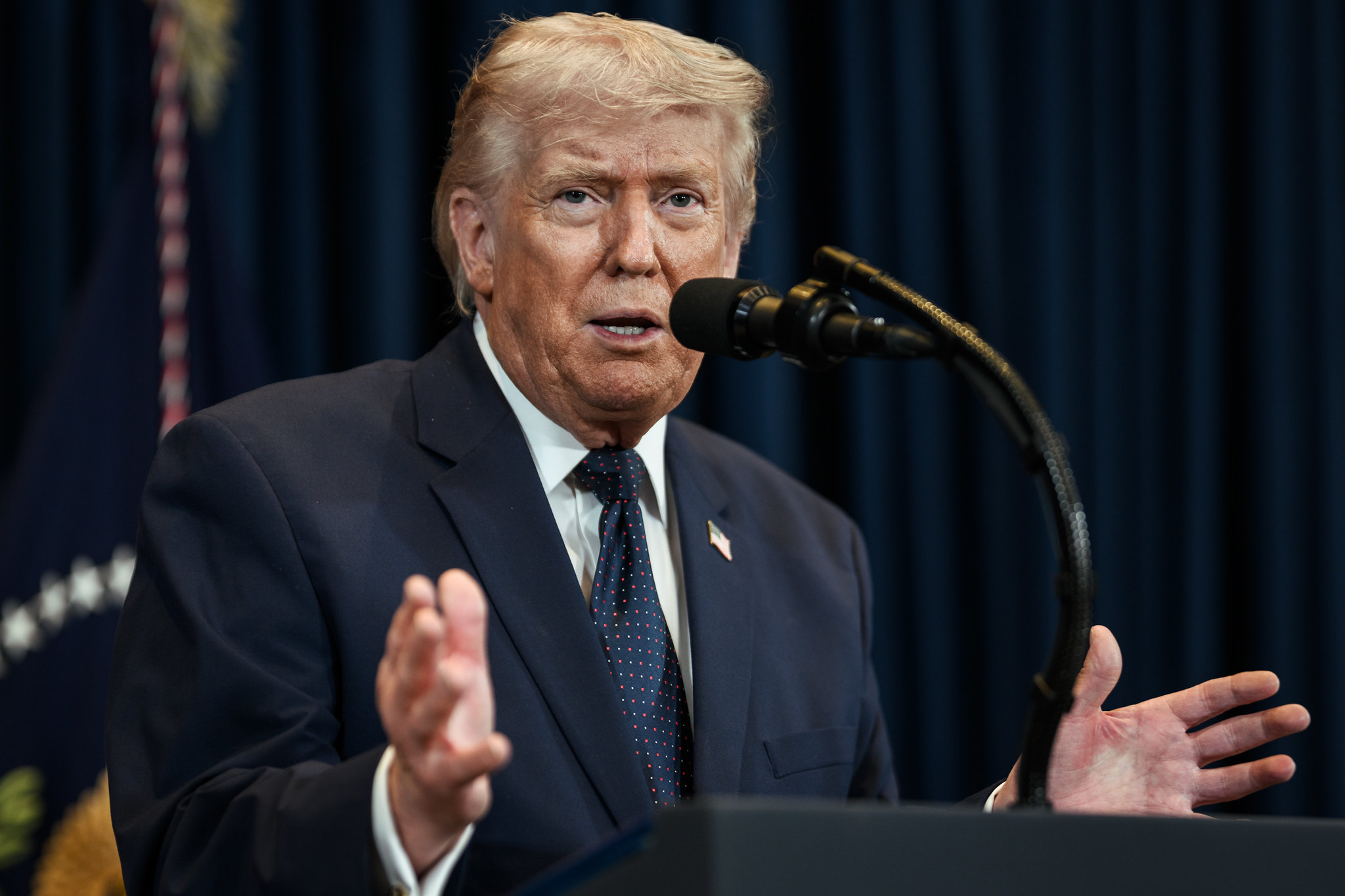
President Trump delivering remarks. Image source: Official White House Photo by Daniel Torok.
According to President Donald Trump, inflation will “come down like a rock” once the Iran war concludes. But based on what history tells us, Trump and Wall Street are in for an unpleasant surprise.
The Iran war has led to a historic energy supply disruption
Though some degree of inflation is normal and healthy for the U.S. economy, the lion’s share of the inflationary pressure over the last three months can be traced to the Iran war.
Not long after Trump gave the U.S. military the OK to attack on Feb. 28, Iran closed the Strait of Hormuz to most commercial vessels. This action halted the movement of approximately 20 million barrels of petroleum liquids per day (about 20% of global demand) and represents the largest energy supply disruption in modern history.
BREAKING: May CPI inflation rises to 4.2%, the highest level since April 2023.
Core CPI inflation also rises to 2.9%, the highest since September 2025.
Inflation in the US is officially back above 4% and more than double the Fed’s target.
Odds of Fed rate hikes are rising.
— The Kobeissi Letter (@KobeissiLetter) June 10, 2026
Perhaps it’s no surprise that energy prices soared in the wake of the Strait of Hormuz’s closure. Rapidly rising fuel costs have been the primary catalyst responsible for TTM inflation jumping from 2.4% in February to 4.2% in May.
In President Trump’s view, working out a deal with Iran and reopening the Strait of Hormuz will bring down crude oil prices, leading inflation to “come down like a rock.” While a decline in crude oil prices is expected when the Iran war ends, inflation could prove surprisingly sticky.

Image source: Getty Images.
Inflation may prove resilient for several quarters to come
One of the trickiest aspects of energy supply shocks is that they occur in multiple waves.
The inflationary effects on fuel prices are almost immediate. Gas prices soared at the fastest pace in more than three decades. But it’s common for fuel prices to rise like a rocket on worrisome supply news and fall like a feather once supply issues are resolved. In other words, even if crude oil prices tumble, it may take several months for supply to ramp up and for gas prices to meaningfully decline.
Furthermore, the inflationary effects of energy supply shocks on businesses are often delayed by a few months. Once the impact of higher transportation and production costs filters into monthly economic data, it can counter some or all of the benefit of lower crude oil prices.
There is now more than a 70% chance of a rate hike by the end of the year 🚨🚨 pic.twitter.com/ieXAi8ICJZ
— Barchart (@Barchart) June 8, 2026
Statistically, the probability of the Federal Reserve raising interest rates is higher now than it was just a few weeks ago. The expected spillover of inflationary pressures into core spending categories (i.e., beyond energy) makes it incredibly unlikely that U.S. inflation will meaningfully decline anytime soon.
Both President Trump and Wall Street are looking for a quick fix to inflationary pressures — but history says they aren’t going to get it.