
It’s been an eventful past month on Wall Street. The Dow Jones Industrial Average (^DJI +0.70%), S&P 500 (^GSPC +0.50%), and Nasdaq Composite (^IXIC +0.31%) jumped to fresh highs, while a changing of the guard was made official at the Federal Reserve. Jerome Powell served his final day as Fed chair on May 15, while Trump’s handpicked successor, Kevin Warsh, was sworn in on May 22.
Something else that’s set the tone on Wall Street is the monthly inflation report from the Bureau of Labor Statistics. In May, trailing 12-month inflation soared to 4.2%, representing a three-year high.
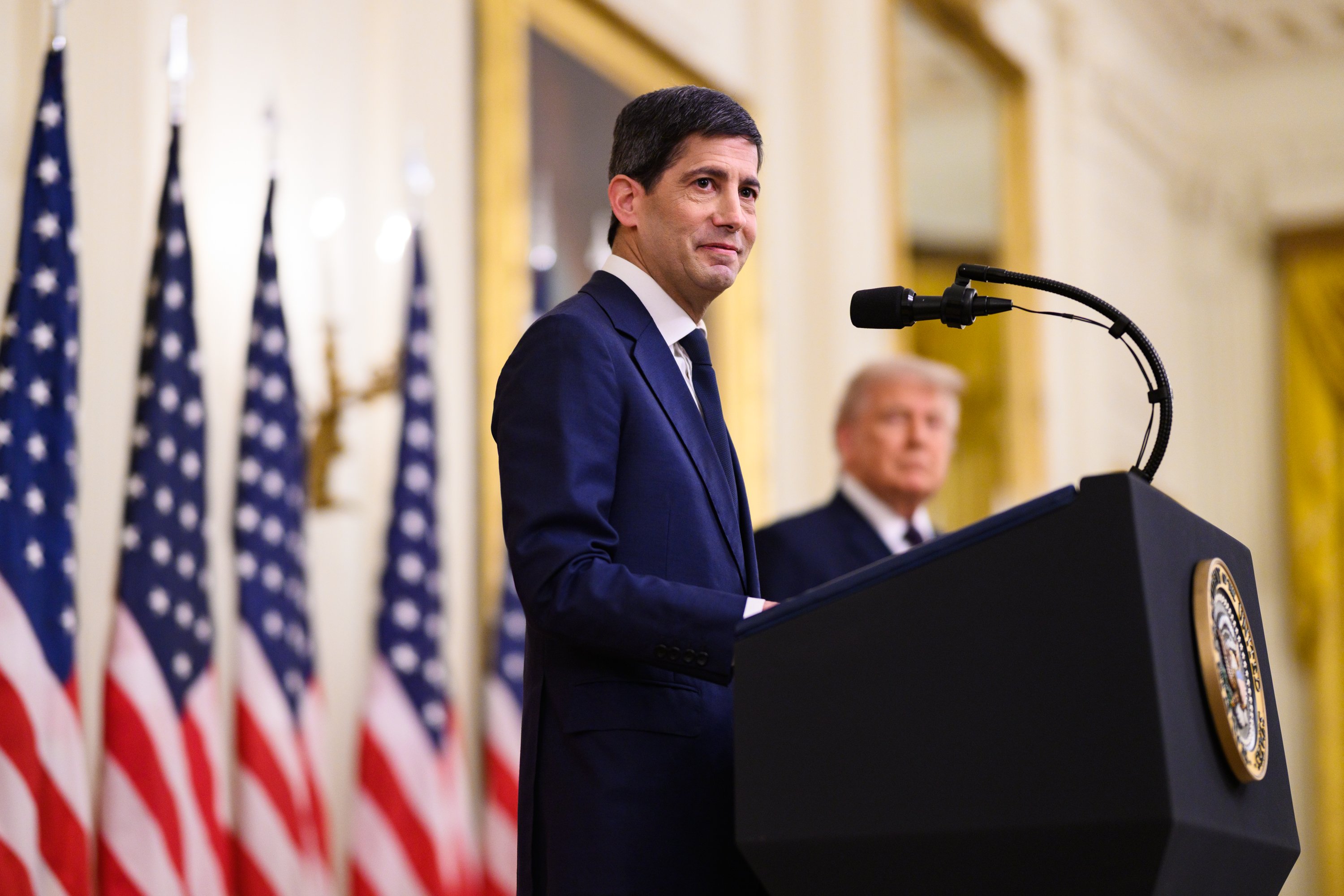
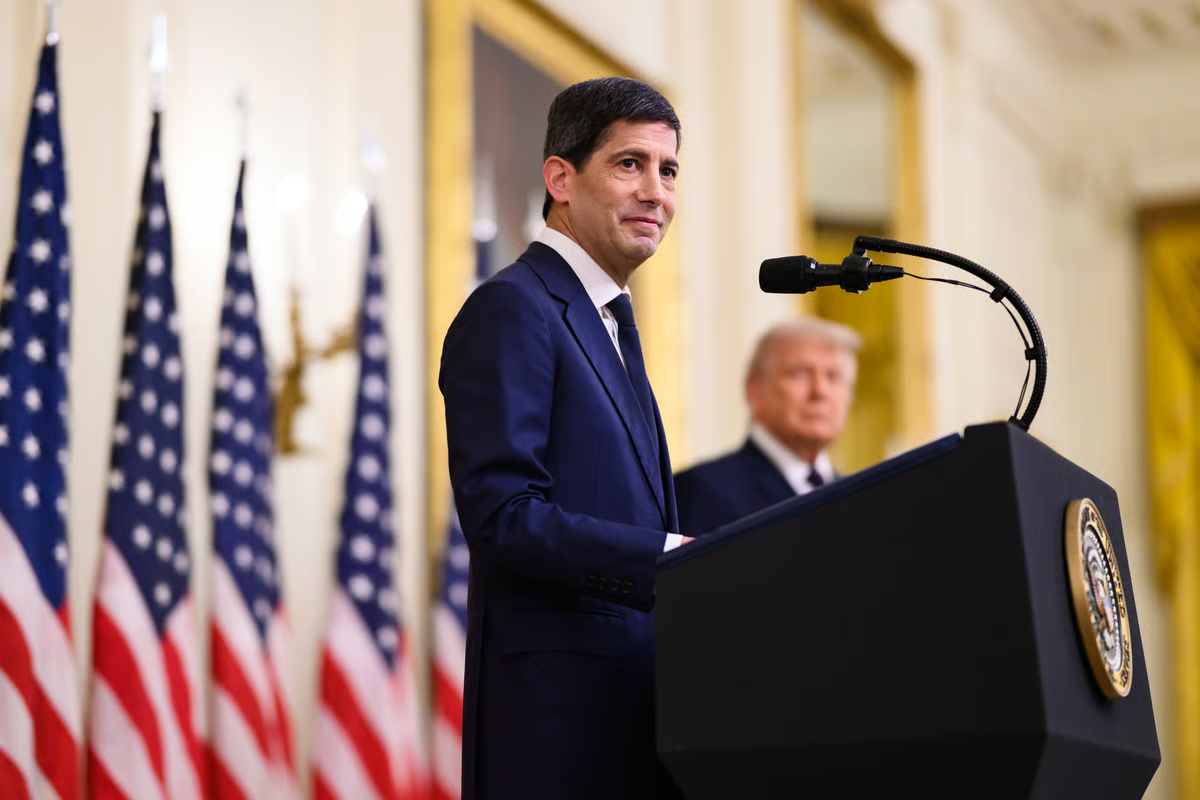
Fed Chair Kevin Warsh delivering remarks. Image source: Official White House Photo by Daniel Torok.
This coming Wednesday, June 17, Fed Chair Kevin Warsh and the other 11 voting members of the Federal Open Market Committee (FOMC), who determine our nation’s monetary policy, are likely to take the first step toward dropping the hammer of President Trump’s Iran-war-driven inflation (better known as “Trumpflation”).
Fed Chair Warsh’s first FOMC meeting in charge should yield a subtle but significant shift
Aside from the monthly inflation report and the SpaceX IPO, few topics are garnering more attention than the Fed’s take on interest rates. While the consensus expectation is that the FOMC will leave the federal funds target rate unchanged on June 17, Warsh and other FOMC members are likely to make a subtle yet powerful change to monetary policy.
Powell’s final meeting as Fed chair on April 29 featured a record four dissents. Three of these dissents were in opposition to the FOMC’s continued use of its easing bias statement. In other words, this statement indicates that the central bank is more inclined to cut interest rates to stimulate economic activity than it is to raise rates.
NEW: There were *four* dissents on the Fed’s rate pause.
Three bank presidents wanted to ditch the easing bias, and a governor dissented for a rate cut.
The last meeting with four dissents was in 1992. pic.twitter.com/JM88jOXIAg
— Nick Timiraos (@NickTimiraos) April 29, 2026
However, the April Fed meeting minutes, released in mid-May, indicate that a majority of FOMC members opposed the easing bias statement. The first official act that Warsh may oversee as Fed chair is a subtle but meaningful shift from an easing bias to a neutral one.
Before being confirmed as head of the central bank, Kevin Warsh expressed his displeasure with forward-looking interest rate guidance that might constrain the FOMC’s policy decisions. Shifting to a neutral bias — especially with inflation at a three-year high — would give the FOMC ample room to maneuver.
Furthermore, Warsh’s voting record as a former FOMC member (Feb. 24, 2006 – March 31, 2011) points to his hawkish tendencies. Throughout the financial crisis, he cautioned his peers against lowering interest rates, even as the unemployment rate surged. Warsh’s favoring of higher interest rates to stabilize prices adds fuel to the fire for a neutral bias shift.
While the writing has been on the wall for some time that the Federal Reserve would eventually need to act to suppress Trumpflation, any changes are likely to be perceived negatively by Wall Street and investors.
Shiller PE Ratio is now just 3.5% away from passing the Dot Com Bubble as the most expensive stock market valuation in history 🚨🚨🚨 pic.twitter.com/1ceOa3yhfs
— Barchart (@Barchart) June 1, 2026
The stock market entered 2026 at its second-priciest valuation in history, meaning it has no margin for error. Even a subtle shift to a neutral bias would indicate to Wall Street that rate hikes are becoming far more likely. That’s awful news for a stock market that’s relying, in part, on debt to finance the artificial intelligence data center build-out.
If Warsh and the FOMC take the first step toward dropping the hammer on Trumpflation this Wednesday, they may also be inadvertently pulling the rug out from beneath the stock market.
